-
When Climate Extremes Don’t Lead to Conflict: Evidence from the Pacific Islands
February 18, 2026 By Tobias Ide
The article was adapted from “Local Resilience Can Mitigate Climate Conflicts in the Pacific,” published by Global Outlook.
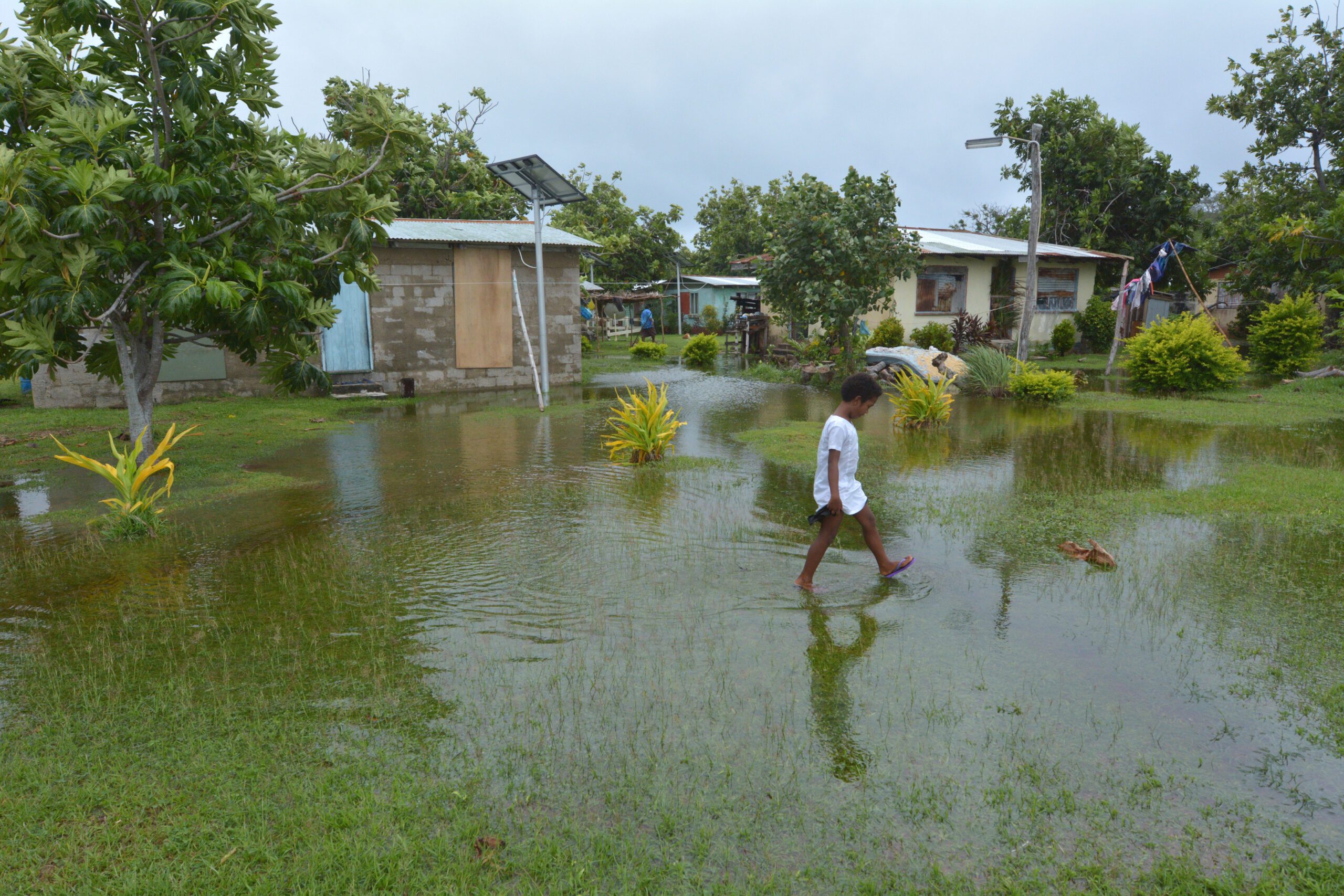
Pacific Island countries sit at the frontline of climate change. Many consist of small, low-lying islands, with long coastlines and vast ocean spaces between them. Livelihoods often depend on agriculture and fishing, and importing water or food is often infeasible or expensive. This makes those large ocean nations highly vulnerable to the impacts of climate change, such as storms, droughts, and rising sea levels.
Given these vulnerabilities, analysts have expressed concerns that climate change could heighten various forms of socio-political conflict in the region. Yet the Pacific Island countries have received scarce attention in research on climate change and conflict. While recent scholarship has begun to explore possible pathways between climate stress and conflict in the Pacific Island countries, the region remains comparatively understudied. This is especially surprising given the regions’ high climate vulnerability and increasing geopolitical relevance.
In new research published in Environment and Security, Ore Koren, Luke Derrik, and I address this knowledge gap. In the study, we systematically collected data on conflict events (such as protests, riots, and communal violence) in Fiji, Solomon Islands, and Vanuatu. We then analyzed whether these events are statistically associated with climate extremes, such as storms, floods, and heatwaves.
The results are surprising. Climate disasters are not a significant predictor of conflict events in the Pacific Island countries.
Climate extremes do not drive conflict risks in the Pacific
This absence of a statistical relationship holds true across both urban and rural areas. In cities, where high values of (and competition for) land, post-disaster migration, and opportunities for political mobilization are often seen as increasing the risk of climate-related conflicts, no such statistical signal emerges either. Even conflicts over natural resources like water or forests do not show a consistent association with climate extremes.
These findings complicate prevailing narratives abour climate change and conflict. The Intergovernmental Panel on Climate Change (IPCC) has concluded that climate change can increase conflict risks, particularly in highly vulnerable regions with histories of political instability and in the context of low-intensity conflicts like protests (as compared to large-scale violence like civil wars). Fiji, Solomon Islands, and Vanuatu meet this criteria – all face significant climate exposure, and each has experienced episodes of political unrest in the past. Yet even for smaller-scale forms of conflict, the study does not find a robust link.
Interpreting the absence of conflict
As a starting point, it is important to clarify three things. First, the absence of observable conflict does not necessarily imply peace or justice, particularly where those least responsible for climate change suffer most from its consequences.
Second, the study focuses on visible and collective forms of conflict. Disasters, but also competition for disaster-related support schemes, might well result in lower-level, less visible forms of conflict, such as household and intimate partner violence or lower social cohesion within communities. These dynamics warrant further research.
Third, the data has limits. The analysis, for instance, covers only just three countries over eight years and does not include rainfall anomalies due to data constraints.
That said, the absence of a correlation between climate extremes and socio-political conflict events is still noteworthy. The findings point to forms of agency and resilience within the Pacific Islands countries.
This is not to romanticize local communities and national governments—as everywhere in the world, they have their share of tensions and shortcomings. But the Pacific Island countries also have well-established traditional governance systems, strong community networks, and experience managing environmental shocks. Given their remote location, tropical climate, and oceanic geography, living with climatic variability is not new for them. These are important assets for coping peacefully with the impacts of climate change.
Consider Vanuatu after Cyclone Pam in 2015. Despite the intensity of the storm and extensive damage, fatalities were relatively limited, and recovery comparatively swift. Local community structures and NGO-led Community Climate Change Committees coordinated well, and played key roles in preparedness and response. Their work strengthened traditional social networks rather than replacing them. At the same time, national authorities managed the inflow of international aid effectively, thereby increasing trust in the government. Consequently, no major conflicts erupted in the aftermath of Pam.
Rethinking assumptions and supporting local capacity
For policymakers and donors, these findings carry practical implications.
It is important to avoid doomsday scenarios when thinking about climate change in the Pacific. For sure, the respective countries are highly exposed to and quite vulnerable to climate change. But portraying them primarily as helpless victims or conflict hotspots can distort policy responses. Overemphasis on worst-case scenarios may crowd out economic investment, prioritize relocation over adaptation, and sideline local capacities.
A more grounded approach recognizes that Pacific communities and governments, despite their imperfections, have demonstrated capacity for adaptation and social cohesion under stress. External support is most effective when it builds on these strengths by aligning with locally identified priorities, reinforcing existing institutions, and supporting community-based resilience efforts. Rather than preliminary resignation or relocation, this can support the building of climate-resilient peace.
Tobias Ide is head of the Transnational Politics Research Department at PRIF, and is Professor of Peace and Conflict Research at TU Darmstadt. His research focuses on the security implications of climate change, the role of the environment in peace and conflict processes, rebel groups, and education in conflict contexts.
Sources: A Journal of Social Justice; Asia Pacific Viewpoint; Environment and Security; Environmental & Urbanization; Routledge Studies on Asia-Pacific Region; Toda Peace Institute
Photo Credit: Licensed by Adobe Stock.
 A Publication of the Stimson Center.